Average Reviews:

(More customer reviews)Are you looking to buy George Szell: A Life of Music (Music in American Life)? Here is the right place to find the great deals. we can offer discounts of up to 90% on George Szell: A Life of Music (Music in American Life). Check out the link below:
>> Click Here to See Compare Prices and Get the Best Offers
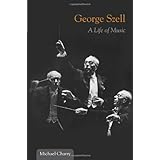
George Szell: A Life of Music (Music in American Life) ReviewAs a big George Szell fan, I was hoping to love this biography, but I was disappointed. I did not feel that the Michael Charry revealed any new insights about what made Szell such a great and noteworthy conductor.The major problem is that Charry feels the need to account for every moment in Szell's life. As a result, many of the chapters provide superficial overviews of a year in Szell's life, mentioning just the music he conducted, anecdotes about contract negotiations, and discussions with administrators at other orchestras about programming for guest appearances. It feels like it was originally written in bullet form and then converted into complete sentences. Understandably, Charry paces things very quickly to get to Szell's Cleveland tenure as soon as possible, and devotes the majority of the book to that. A lot of this period in Szell's life is already well known -- in fact, a lot of the stories and anecdotes Szell devotees will recognize from CD liner notes (many written by Charry) as well as Szell's hour long interview with John Culshaw for the BBC (which is by far the most insightful Szell document), audio interviews with Paul Myers and WQXR, and the Bell Telephone Hour documentary. What I wanted to know more about was Szell's life before Cleveland, especially when he was a prodigy in pre-war Europe.
Szell continues to fascinate listeners over 40 years after his death because of his unique interpretations and ability to exert total control over how the Cleveland Orchestra sounded -- so I was hoping for more analysis of this. From reading about Szell in the past, I know that he was meticulous at preparing a score he would conduct -- he would play through them on the piano several times -- and that his rehearsals were legendary for their intensity. Rather than trying to touch on every single year in Szell's life, I would have preferred if more of the book had been devoted to stories about Szell's creative process, leaving out years where not a whole was happening.
One thing I found particularly annoying, is that while Charry does touch on Szell's infamous temper, he never contextualizes it. For instance, Charry mentions a few incidents where Szell abruptly quit guest conducting gigs because he thought he was being shorted on rehearsal time, that singers were completely unprepared for their parts, general disagreements with management, etc. Whether or not Szell was in the right for walking out -- Charry typically includes Szell's lengthy defense for his actions that have been preserved in letters -- I was left wondering if other conductors of Szell's stature acted this way during his lifetime, or was it unique to him? Were these incidents major news back in the day, or did they happen regularly enough that it wasn't worth mentioning? Did these actions harm Szell's reputation?
Another issue I have with Charry is that he is a bit disingenuous with making it seem like Szell's repertoire was broader than it really was. Szell is often criticized for mainly conducting the 19th Century Austro-German repertoire and rarely touching 20th century music, and Charry's extensive listing of Szell's concert repertoire in the appendix does confirm this. But throughout the book, Charry mentions every time Szell conducted a premier of some kind. To give an example, Charry gives the impression that Szell was a major champion of Hindemith -- he conducted lots of Hindemith pieces when they were still brand new. But the appendix reveals that with the exception of "Symphonic Metamorphosis," Szell conducted them each just that one time (he did conduct Concert Music for String Orchestra and Brass Instruments twice). And this is the case for most 20th century music Szell conducted -- he did conduct a lot of 20th century music and made numerous premiers, but he rarely conducted any of those pieces a second time. I would have liked to hear why Szell was so conservative in his programming (and one theory I've heard is that a component of making Cleveland a great orchestra was that he monopolized repertoire -- lots of pieces and composers were off-limits to guest conductors, resulting in 24 years of the Orchestra only playing Beethoven, Brahms and R. Strauss, etc. his way).
I do have to give credit to Charry for reminding us that Szell had a long career -- and in some senses many lives -- before he came to Cleveland. So much attention has been given to the last 24 years of his life that we forget for a period Szell was a composer, pianist, and for several decades he was best known as an opera conductor. Today we think of Szell has a genius of the orchestra, but had he died in 1950, he'd be remembered as one of the preeminent conductors of German opera.
I would be remiss if I didn't mention that Charry does talk about Szell's wife, Helene, and aspects of his personal life, such as extensive details on his summer vacationing habits, which was actually pretty interesting. Szell's conducting activity in the summer was very limited so he could spend a lot of time simply relaxing and playing golf in Europe. Part of his summer ritual included extensive driving from one city to the next. Charry even (briefly) mentions Szell's relationship with his stepson -- despite his temper with an orchestra, it actually sounds like Szell was a pretty good step-dad.
Despite my qualms, I'm sure that Szell fans will still want to buy the book, and it is worth getting just for extensive listing of Szell's discography (which includes 78-rpm recordings from the 1920s) as well as repertoire (with dates of when he conducted each piece). Getting to see a conductor's career laid out like this is fascinating. It reveals who were Szell's favorite composers and his favorite pieces. For instance, Brahms and Beethoven totally dominate season after season. The surprises are the most interesting. Szell is known as one of the great Dvorak conductors, yet he never conducted the 9th after the '58-'59 season when he recorded it (but he continued to conduct the 8th every other season). Whiles he's not remembered for french music, "La Mer" and "Daphnis et Chloe" Suite No.2 were routinely programmed. And despite his devotion to Haydn on recording, he only conducted most of the symphonies once or twice, and most performances were pre-1960. Another cool fact: Szell loved Walton's "Hindemith Variations." From the season it was premiered ('62-'63) until his death (1970), Szell conducted it all but two seasons. It's hard to imagine many 20th century pieces today being programmed with such regularity. Finally, even Szell's opera repertoire has been included. To give you an idea of his opera activity, at the Berlin State Opera, between 1924 and 1929, he led 371 performances of 34 operas. "Tosca" was among the post performed -- just imagine what Szell conducting "Tosca" must have sounded like!
Final thought: the real missed opportunity here was to aggregate all the various audio and video interviews Szell made, and for the first time ever, make them widely available to the public. It's a shame that there is all of this multimedia out there featuring Szell reflecting on his life, his conducting style, his thoughts on music, etc., and it is languishing in obscurity. If there was ever a biography which should have been an electronic book with embedded multimedia, this was it.George Szell: A Life of Music (Music in American Life) Overview
Want to learn more information about George Szell: A Life of Music (Music in American Life)?
>> Click Here to See All Customer Reviews & Ratings Now

0 comments:
Post a Comment