Average Reviews:

(More customer reviews)Are you looking to buy The Jazz Ear: Conversations over Music? Here is the right place to find the great deals. we can offer discounts of up to 90% on The Jazz Ear: Conversations over Music. Check out the link below:
>> Click Here to See Compare Prices and Get the Best Offers
The Jazz Ear: Conversations over Music ReviewSince I'm going to voice concerns about jazz writing in general, let me start by saying that I like this book a lot. I read it in one sitting and I underlined numerous passages to copy. Having said that....Jazz is my favorite and longest held music, but unlike classical music, it suffers from a dearth of serious, sustained popular critical writing. There are exceptions to this statement, most notably Gunther Schuller's studies of early swing and Ellington. Some jazz musicians, principally composers and arrangers, have written at length on how to construct a jazz piece and do a solo. But most books on jazz today for a lay audience are either biographical or reminiscent in nature (John Szwed on Sun Ra and Miles, Andy Hamilton on Lee Konitz, Laurence Bergreen on Louis Armstrong, Bill Crow's hilarious and fascinating anecdotes about the jazz life) or journals and reviews (Whitney Balliett's Collected Works: A Journal of Jazz 1951-2000, Gene Lees's and Balliett's essays on various pop and jazz singers, countless collections of interviews). Even Gary Giddins's Visions of Jazz: The First Century, a book I like a great deal, is basically a collection of occasional essays, relieved by a few record reviews (e.g., of Hank Jones and Charlie Haden's Steal Away).
Ben Ratliff has been jazz critic at the New York Times since 1996. He knows the jazz scene, he knows his music and he writes sympathetically and perceptively about this elusive American music. This is a good book. I read it in one sitting. I had read it all it four hours after I picked it up and I enjoyed it thoroughly. Nonetheless, I was frustrated that it didn't do more than it does.
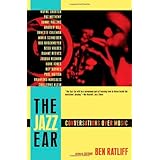
The hook in this highly readable collection of essays is that Ratliff asked a number of prominent jazz musicians to pick recordings, a maximum of six, to listen to and talk about with him. They didn't have to be jazz recordings. Several weren't: Wayne Shorter wanted to listen to Vaughan Williams, Pat Metheny to Bach and Ornette Coleman to a Jewish cantor recorded in 1916; Maria Schneider chose Martha Argerich's recording of the Ravel piano concerto in G major and Branford Marsalis selected Stravinsky and Wagner). One rule applied: they couldn't select a recording on which they themselves played. One musician, Ornette Coleman, refused to comply with that rule but then, Coleman has seldom followed other people's rules. Ratliff's idea was that in talking about others' music, his artists would reveal much about their own musical history, preferences and ideas. He was right. They did. The result is a set of fascinating interviews with some of the most important and representative artists in jazz today. In addition to the artists mentioned above, they include such luminaries as Bob Brookmeyer, Hank Jones, Dianne Reeves, Branford Marsalis Joshua Redman, Roy Haynes, Paul Motian, and Andrew Hill.
It's not a fault of this book to say that I wish he had included some other musicians. I would love to have heard from more musicians who live on the fringes of success -Roscoe Mitchell or Muhal Richard Abrams, for instance, from the AACM; soprano saxophonist Jane Ira Bloom, who seems to owe allegiance to no one except herself and has been woefully neglected b y listeners; David Murray, my personal favorite among modernists; Billy Bang; William Parker. And I hope someday someone writes about the European modernists, from Peter Brotzman and Evan Parker and Hann Bennink and Derek Bailey to Enrico Rava, Tomasz Stanko, Gianluigi Trovesi and Stefano Bollano.
Jazz is a spacious house. It's not to Ratliff's discredit that he hasn't spread his net wider, but I hope he keeps writing this series. And I hope that someday he combines his insights into this fragile, evanescent, glorious music and produces a capacious study of the music's sources, strengths and techniques.The Jazz Ear: Conversations over Music Overview
Want to learn more information about The Jazz Ear: Conversations over Music?
>> Click Here to See All Customer Reviews & Ratings Now

0 comments:
Post a Comment